How Do We Stop Having the Same Fight Over and Over?

Most couples don’t come to me because they can’t communicate. They may be quite connected and generous with each other in many aspects of their relationship. They come because they’ve had some version of the exact same fight, with slightly different context, for months or years, and nothing about talking it through has actually made it stop coming back.
Short answer: you stop repeating a fight once both people can see what it’s actually made of, which is rarely what’s on the surface. Underneath the argument about the phone, the schedule, the tone of voice, are usually two old wounds reacting to each other, each one convinced it’s simply responding to the present moment. The argument stops being productive once each partner begins tending to their own wound and building a case against the other’s. They take sides against each other rather than remaining on the same team against the “problem.”
What I Actually Notice First
When a couple sits down and starts explaining their fight, I try not to get pulled into the content right away, (which can be challenging,) because the content is usually a decoy. What I’m watching for first is the shape of the dynamic between them.
Sometimes both partners arrive locked into a well rehearsed story of their own righteousness. Backs are up before anyone speaks. Each one has an internal case file, and both are waiting for the other to concede every harm, past, present, and future, before they’ll consider softening. They’re talking at each other, not with each other.
Other times it’s asymmetrical. One partner holds the visible angry or aggrieved position. The other looks beaten down, quiet, almost defeated, like they’ve given up defending themselves. That second position can look like humility. But very often it isn’t. Underneath the appeasement is frequently an unnamed righteousness of its own, a private conviction that they’re actually the one who’s been wronged, and it’s this unspoken belief that quietly blocks real change, even while the person on the surface looks cooperative and willing.
The Old Wound Doing the Talking

Almost every recurring fight has less to do with the couple in front of me than with two individual histories getting triggered by each other in real time.
This isn’t a new idea. Part of why we’re drawn to certain partners in the first place is that they touch something unfinished from earlier in our lives, an old attachment injury that never fully got resolved. The relationship becomes another chance to heal it. That’s the hopeful version. The harder version is that until each person recognizes what’s theirs, the relationship just keeps reopening the same wound instead of healing it.
A partner can learn to be sensitive to what triggers you without having caused it, but it requires the both partners being clear on what wounds they brought into the relationship. The work isn’t figuring out whose fault the fight is. It’s each person learning to recognize when an old wound, not the present moment arguement, is doing the talking and then do something different.
I approach this work from a somatic, polyvagal informed lens, which means I start with the body’s experience before I ever get to the story. The nervous system reacts first, the narrative gets built after. Once someone can recognize that reaction happening in real time, in their own body, the story underneath it becomes much easier to find.
What I Call “Your Precious”
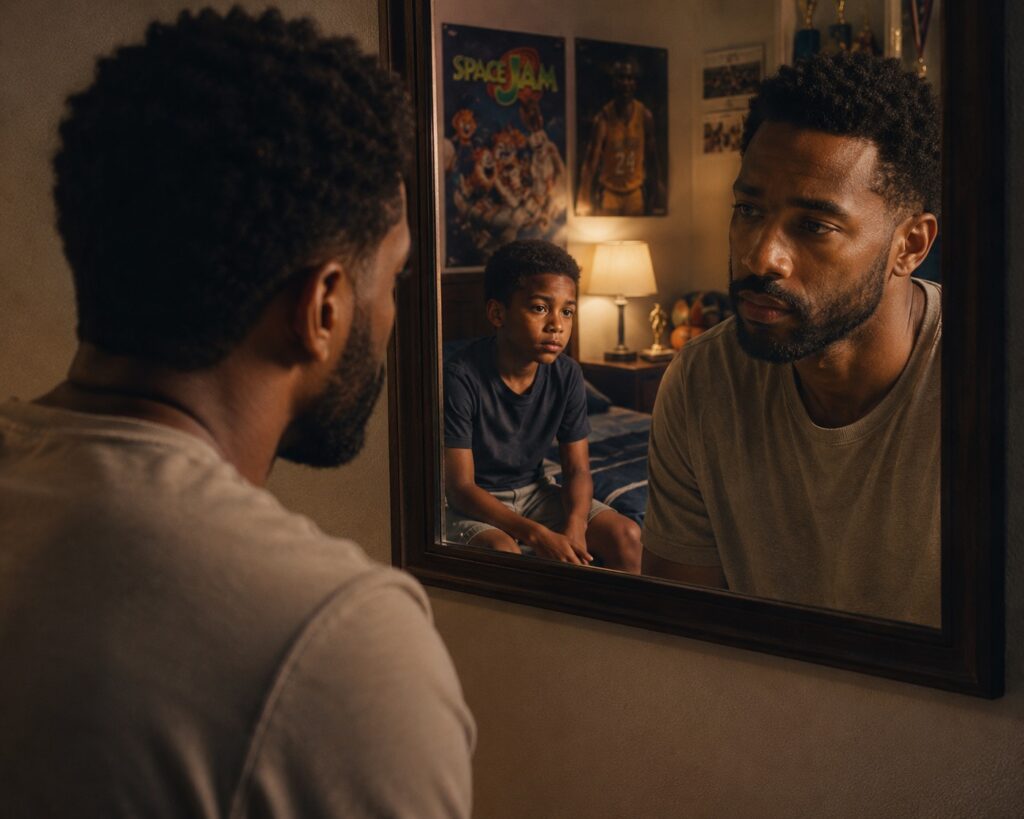
No this isn’t my Lord of the Rings fangirl showing. This is a phrase I use with clients for describing these old wounds in order to evoke compassion for your own experience: your precious. It’s shorthand for the real experiences, usually from childhood, that actually happened to a younger part of you, and were never met by an attuned adult who could help a kid make sense of what they were feeling. Left unmet, those moments don’t just fade. They become your triggers, then nervous system reactions, then survival strategies, then beliefs about ourselves, our partners, and relationships in general.
The work always starts in the same place, with each person building real attunement and compassion toward their own triggeres. Not analyzing it, not fixing it, just noticing it with curiosity instead of judgment. Only once someone can hold that for themselves are they able to extend the same curiosity toward their partner, to consider that the person across from them is carrying an equally real, equally old “precious” of their own, and that it might be showing up in this exact fight too.
The Work That Predicts Whether Therapy Will Actually Help
Almost everyone walks into a first couples session believing, at least partly, that the problem is the other person. That belief tends to get challenged fast, because it has to be before anything else can happen.
What I’ve noticed, across a lot of couples now, is that the ones who move forward are the ones willing to start an honest inquiry into their own reactions before they ever expect their partner to change. Not confession, not self blame. Something closer to curiosity aimed inward. Can you name what actually gets triggered in you during this fight? Can you trace it back to where it might have started? Can you get curious about what that reaction has been trying to protect, the younger or more vulnerable part of you that built this defense in the first place?
That inquiry, done honestly, does two things at once. It gives you real information about your own wound instead of just its symptoms. And it tends to open something toward your partner, a willingness to consider they might be running a very similar process from inside their own experience, even while it looks like anger or silence or shutting down from the outside.
Say the recurring fight is about him picking up his phone every time she starts to talk about something hard. On the surface, it reads as an issue of attention. Underneath, her old story might be about being unheard or replaced. His old story might be about being trapped or never getting it right, so he reaches for something he can control. Neither origin point excuses the behavior in the moment. But naming them is usually the first place the fight stops being a referendum on the whole relationship and starts being information both people can actually use.
One Important Caveat
Everything here assumes both people are safe and genuinely want the relationship to work. If there’s physical violence or coercive control in a relationship, this framework doesn’t apply, and no responsible therapist will run standard couples work in that situation. Individual therapy, safety planning, and a different kind of support are the ethical next step. What I’m describing here is for couples who are stuck and hurting, not couples where one person is in danger.
Where This Leads

None of this happens instantly, and it rarely happens without support. But the couples who do this work, who can each hold their own precious with some compassion and extend that same curiosity to their partner’s, are the ones who eventually stop having the same fight. Not because the triggers disappear. Because both people finally recognize them for what they are, instead of mistaking them for something the relationship is doing to them.
I’ve spent seven years working with individuals and couples through this lens, somatic and attachment based, solutions focused, built on watching this exact shift happen in the room more times than I can count. If this sounds like your relationship, couples therapy might be worth exploring.
Sources:
- Polyvagal Institute. “What Is Polyvagal Theory?” https://www.polyvagalinstitute.org/whatispolyvagaltheory
- Fraley, R. C. “A Brief Overview of Adult Attachment Theory and Research.” University of Illinois. https://labs.psychology.illinois.edu/~rcfraley/attachment.htm
- Some images accompanying this article may have been created with the assistance of AI and were thoughtfully curated to complement the ideas explored here.